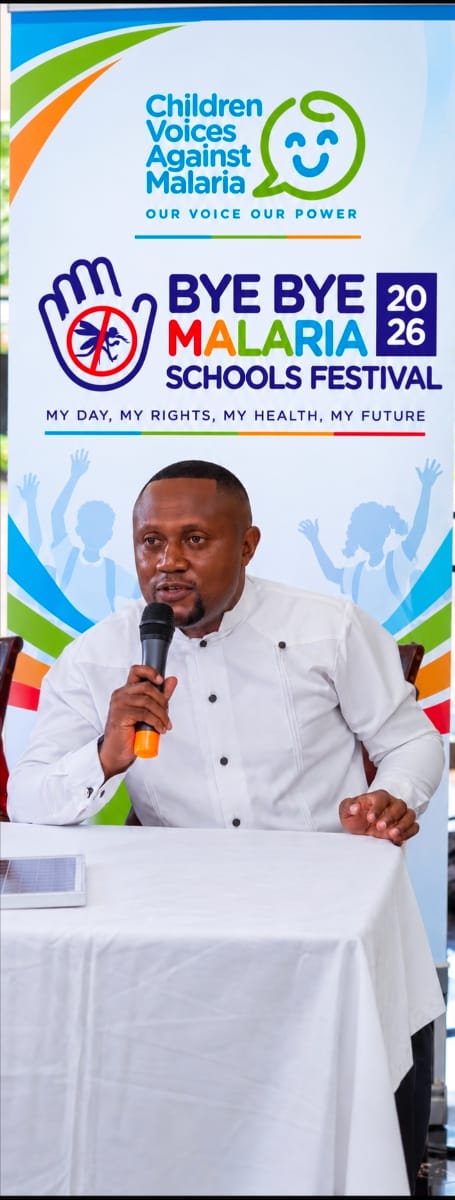
Children Voices Against Malaria Uganda (CVAMU) will hold its inaugural Bye Bye Malaria Schools Festival at Marriott Hotel in Kampala on November 20, 2026, as part of efforts to strengthen malaria awareness and prevention among children and communities.
The festival will run under the theme, “My Day, My Rights: My Health, My Future,” and will bring together children, schools, health partners and communities to promote malaria awareness, prevention and access to health services.
The event will coincide with World Children’s Day, commemorated annually on November 20. The day marks the adoption of the Declaration of the Rights of the Child by the United Nations General Assembly in 1959 and the Convention on the Rights of the Child in 1989.
Speaking at the launch of the festival, CVAMU Executive Director Henry Lutwama said malaria continues to pose a serious threat to children’s health, education and family welfare.
He said malaria can cause severe illness, disrupt learning, increase school absenteeism and place financial pressure on families.
Lutwama added that children need accurate information, supportive adults and access to proven malaria prevention and health services.
“Schools provide an important platform for helping children learn, develop healthy practices and share correct information with their families,” Lutwama said.
He said CVAMU was building a child-led movement that would bring together schools, learners, teachers, families and partners in efforts to prevent and ultimately eliminate malaria.
“The movement will be officially launched on November 20, 2026, in commemoration of World Children’s Day, placing children’s voices, leadership and right to health at the centre of malaria elimination,” he said.
Through school malaria clubs, education, advocacy and practical prevention activities, Lutwama said children would be empowered to promote lasting change in their schools and communities.
CVAMU works with children and schools to promote malaria prevention through education, participation and practical action. The organisation says the festival will provide children with an opportunity to share their experiences, raise awareness and participate in efforts to reduce malaria infections in their communities.
“This festival gives us an opportunity, as children, to share experiences on how to fight malaria because, in the end, we are the most vulnerable,” said Katrina Joyce Bakka, a malaria champion.
The festival comes amid continued concerns over the burden of malaria in Uganda.
Regional health bulletins published in August 2026 indicated that malaria remained a major public health concern, with the Mbale and Lango regions reporting particularly high transmission rates. Paediatric malaria prevalence in parts of Lango was reported at between 32 per cent and 60 per cent.
Broader data finalised in 2026 showed that national childhood malaria prevalence had risen to 13 per cent, from 10 per cent in previous survey cycles.
Health experts have linked the changing malaria burden to factors including shifting weather patterns, rising temperatures and inconsistent use of mosquito nets.
In late August, medical experts and laboratory specialists also warned of an increase in severe malaria cases and rapid clinical deterioration among school-age children.
The festival comes as Uganda implements the Uganda Malaria Elimination Strategic Plan 2026–2030.
As part of the strategy, the Ministry of Health has expanded Seasonal Malaria Chemoprevention (SMC), which involves the intermittent administration of preventive antimalarial medicines to children in areas with highly seasonal malaria transmission.
The intervention, previously focused on children under five, has been extended to children up to 10 years in selected high-transmission areas, including Karamoja.
Lutwama said the festival would complement national malaria-control efforts by equipping children with practical knowledge and encouraging them to promote prevention measures at home, in schools and in their communities.
He said placing children at the centre of malaria prevention could help strengthen awareness and encourage families to adopt effective measures against the disease.